How Brands Are Using AI Influencers for Gen Z Marketing in 2026
TL;DR: Brands are spending big on virtual creators because AI influencers Gen Z marketing delivers higher engagement, lower costs, and total creative control. Gen Z knows these faces aren’t real and follows them anyway. 🤔 Why Your Favorite “Person” on Instagram Might Not Be Real That model you’ve been double-tapping for months? She might not…

By :
Ralph
June 12, 2026
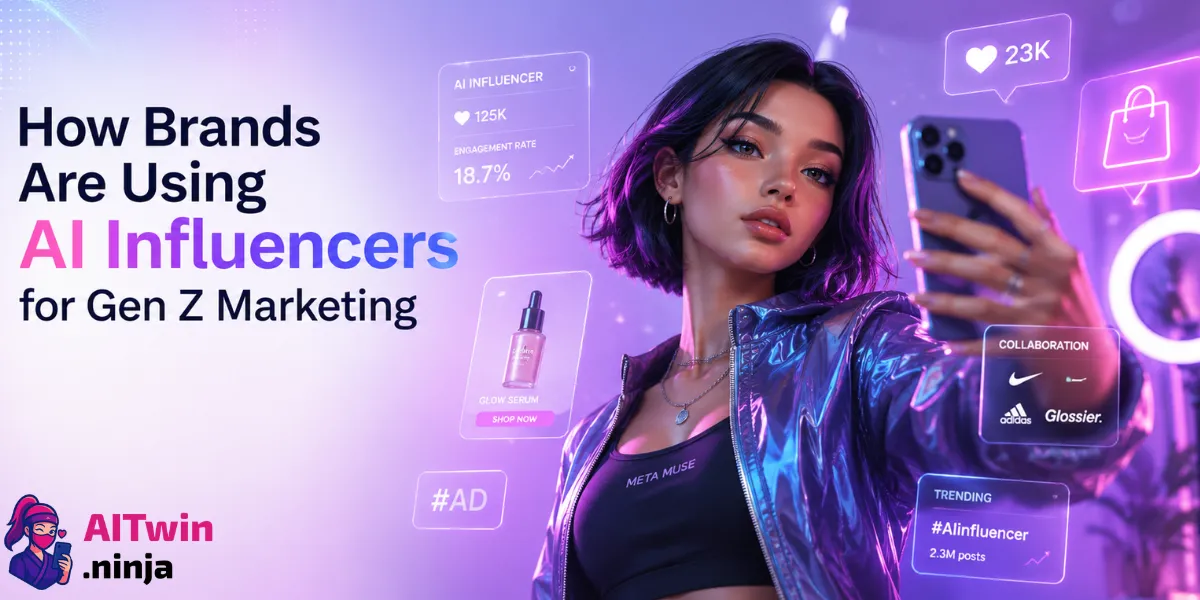
TL;DR: Brands are spending big on virtual creators because AI influencers Gen Z marketing delivers higher engagement, lower costs, and total creative control. Gen Z knows these faces aren’t real and follows them anyway.
🤔 Why Your Favorite “Person” on Instagram Might Not Be Real
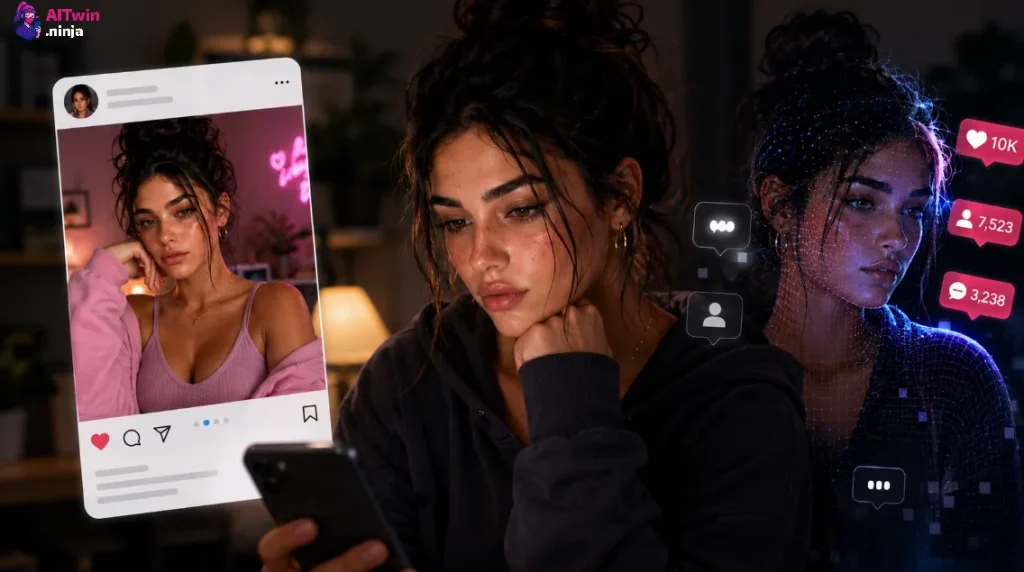
That model you’ve been double-tapping for months? She might not have a pulse.
Nobody sent out a press release, but a quiet shift happened: some of the most-followed faces on social media in 2026 are 100% computer-generated.
They post selfies, drop product hauls, and reply to comments — and millions of people have no idea they’re talking to code.
Here’s the stat that should stop your scroll: virtual influencers pull around 5.9% average engagement, while flesh-and-blood creators sit closer to 1.9%. That’s a 3x gap, and brands noticed long before the rest of us did.
⚡ What Even Is an AI Influencer? (No Jargon, Promise)
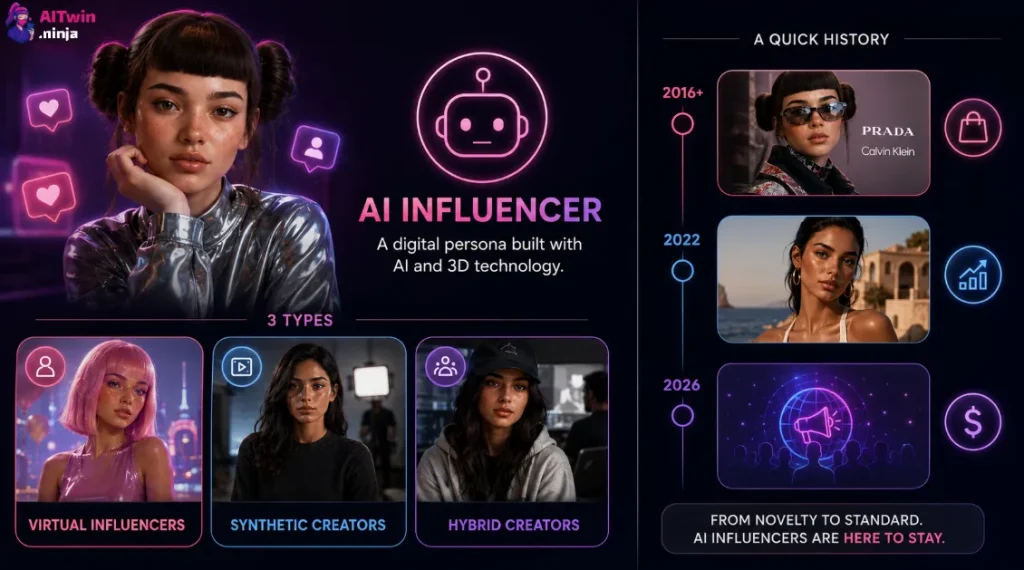
In plain English: an AI influencer is a digital persona built with 3D modeling and artificial intelligence, then given a name, a personality, a backstory, and a posting schedule.
No agent, no flight delays, no 2 a.m. scandals that tank a campaign.
There are three flavors worth knowing:
A quick history? Lil Miquela kicked the door open years ago with Prada and Calvin Klein deals, proving a fake person could land real luxury contracts.
Then Spain’s Aitana Lopez showed a made-up model could out-earn working ones month after month. By 2026, that trickle became a flood, and virtual influencer campaigns turned into a standard line item on marketing budgets.
🧐 Why Gen Z Is the Whole Point
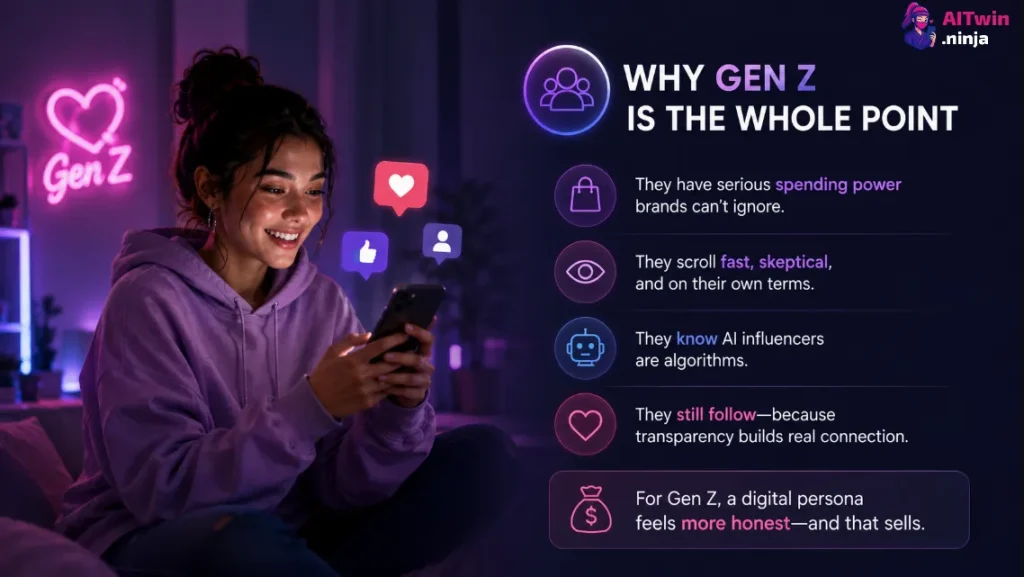
Follow the money. Gen Z controls a spending bloc no marketer can afford to skip, and this is a generation that practically lives inside its feeds.
They consume content fast, skeptical, and entirely on their own terms. They scroll past polished ads without blinking and sniff out a forced brand partnership in seconds. So you’d expect them to reject a literal robot, right?
Here’s the strange part — the trust paradox. Gen Z knows these creators are algorithms wearing a face, and they still hit follow.
For a generation tired of influencers faking enthusiasm for products they secretly dislike, a digital persona feels oddly honest.
There’s no pretending. Everyone’s in on the joke, and that transparency builds a weird kind of parasocial connection that brands are cashing in on.
💰 The Money Talk — What Brands Are Actually Spending
The market math is loud and getting louder.
| Metric | 2026 Snapshot |
|---|---|
| Virtual influencer market value | ~$15.9B |
| Projected value by 2030 | ~$45.8B |
| Growth rate | ~40% CAGR |
| Cost savings vs human creators | 30–50% |
Think about the contrast. A human creator means negotiated fees, travel, reshoots, scheduling headaches, and the constant risk of an off-brand post going viral for the wrong reasons.
A virtual one shoots an entire “campaign” overnight, in ten variations, across five languages, while the marketing team sleeps. Once the persona exists, the cost of the next post is close to nothing.
That’s the pitch quietly redrawing budgets across fashion, beauty, and tech.
👀 The Big Names Already Doing It
This isn’t theory. The collabs are real, even when the creators aren’t.
| AI Creator | Brand Type | Result |
|---|---|---|
| Lil Miquela | Luxury fashion | Major EMV + global reach |
| Aitana Lopez | Beauty/lifestyle | High monthly earnings |
| Lu do Magalu | Retail | Millions of followers |
🔥 How Brands Use AI Influencers for Gen Z — The 2026 Playbook
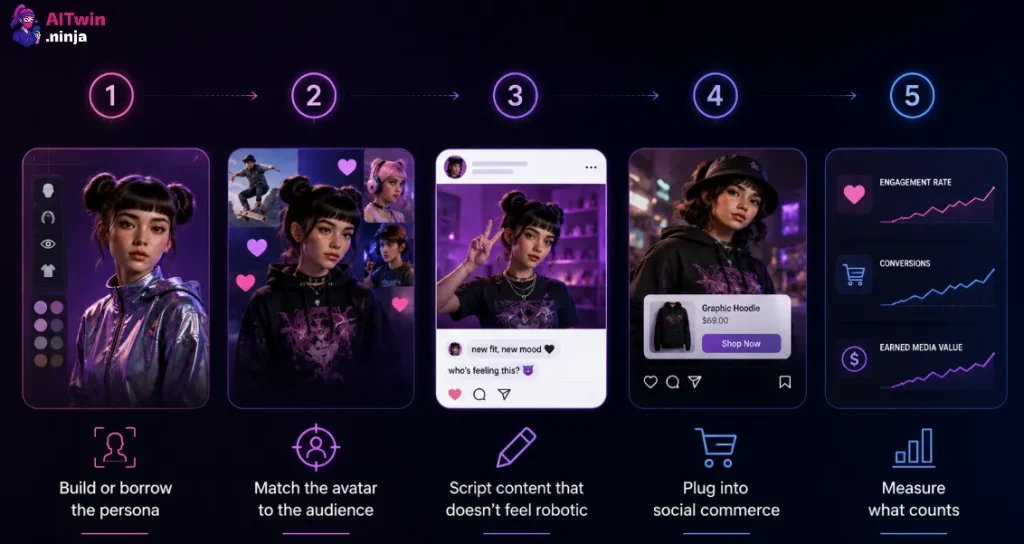
Here’s the actual workflow behind the magic.
Step 1 — Building or borrowing the persona
Some brands build a creator from scratch using 3D tools and AI. Others simply license an existing virtual influencer for a single campaign cycle, skipping the heavy lifting entirely.
Step 2 — Matching the avatar to the audience
The persona’s style, slang, voice, and values get tuned to mirror the exact Gen Z subculture a brand wants — skater, soft-girl, gamer, streetwear, you name it.
Step 3 — Scripting content that doesn’t feel robotic
Captions, banter, and “opinions” are written to sound like a real person with messy, relatable, human energy. The goal is content that reads like a friend, not a press release.
Step 4 — Plugging into social commerce
Shoppable posts, tags, and links turn followers into buyers without ever making them leave the app.
Step 5 — Measuring what counts
Smart brands track engagement rate, earned media value, and actual conversions — not just vanity follower counts that look pretty in a deck.
⚙ The Tools Powering It All
You don’t need a film studio anymore. The modern stack breaks down into three layers:
Stack these together and a small team can run a “creator” that posts like a full agency.
❌ Where It Goes Wrong — The Stuff Nobody Posts About
Time for the honest part, because it’s not all clean wins.
There’s a real authenticity backlash brewing. Push too hard and audiences feel manipulated, especially when a digital model “talks” about lived experiences it never had.
Then come the disclosure rules — regulators increasingly demand a clear “this is AI” and “this is an ad” label, and skipping that invites legal trouble and public roasting. And sometimes the content simply falls flat.
An algorithm can fake a perfect smile, but it can’t always fake a moment that feels genuinely human, and Gen Z spots the difference instantly.
🆚 AI Influencers vs Human Creators — Who Actually Wins?
Neither side wins outright. They win different rounds.
| Factor | AI Influencer | Human Creator |
|---|---|---|
| Cost | ✅ Lower | ❌ Higher |
| Scale & speed | ✅ Instant | ❌ Limited |
| Brand control | ✅ Total | ❌ Partial |
| Trust & relatability | ❌ Weaker | ✅ Stronger |
| Conversion depth | ❌ Often lower | ✅ Often higher |
That scorecard is exactly why smart brands stopped picking sides. The hybrid model — virtual creators for reach, volume, and scale, paired with human creators for trust and deeper conversion — is the 2026 sweet spot. One brings efficiency, the other brings the heartbeat.
🙌 AI Influencers Gen Z Marketing: What’s Coming Next
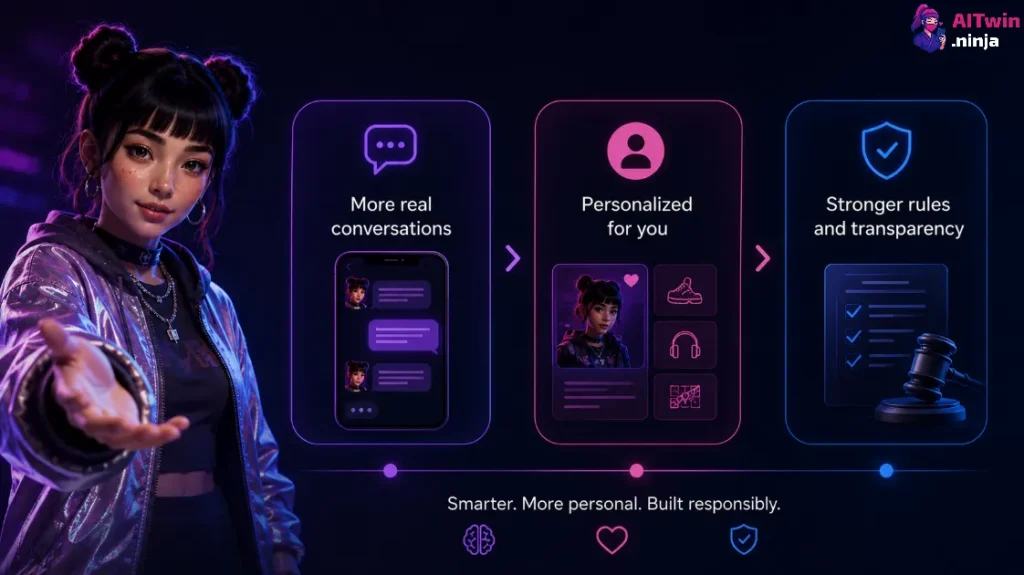
The next wave is interactive. Think AI personalities that reply in real time, hold actual conversations, and remember what you told them last week.
Layer on hyper-personalized 1:1 experiences, where the “creator” tailors content to a single follower’s taste and history.
And waiting just offstage is a regulation wave that will decide exactly how far all of this is allowed to go before it crosses a line.
📈 Should Your Brand Jump In? A Quick Reality Check
Before you spend a single dollar, ask yourself three questions:
- Does my audience live where virtual creators thrive? (Short-form, visual, fast-moving platforms.)
- Do I have content volume needs that a single human creator simply can’t match?
- Am I ready to disclose clearly and stay on the right side of advertising rules?
This works beautifully for fashion, beauty, gaming, and tech brands chasing scale on a budget. It’s a weaker fit for niches that live or die on deep personal trust — think health advice or high-ticket financial services, where a face with no lived experience is a hard sell.
🚀 FAQs
Are AI influencers legal to use in marketing?
Yes, as long as you disclose both the AI nature and the ad relationship in line with local advertising rules.
Do AI influencers really get more engagement than humans?
Often, yes — campaign data shows roughly 3x higher engagement, though conversion can lag behind human creators.
How much does an AI influencer campaign cost in 2026?
It varies widely, but brands consistently report 30–50% savings versus comparable human creator campaigns.
Does Gen Z actually trust AI influencers?
They follow and engage happily, but trust still tilts toward human creators when it’s time to actually buy.
Can small brands afford AI influencer marketing?
Increasingly, yes — lower production costs are putting virtual creators within reach of much smaller budgets.
📌 The Takeaway — Real Results From Fake People
The wildest thing about 2026? Made-up creators are pulling very real numbers. Brands aren’t choosing between human and synthetic anymore — they’re stacking both, using virtual creators for reach and human ones for trust. AI influencers won’t fully replace people, but they’ve clearly earned a permanent seat at the table.
Thinking about testing a virtual creator for your next campaign? Start small, disclose clearly, and measure conversions — not just likes.

AITwin Ninja
Affiliate Disclosure: This post may contain some affiliate links, which means we may receive a commission if you purchase something that we recommend at no additional cost for you (none whatsoever!)
Similar Posts
Author
Ralph
Ralph is a digital architect at AI Twin, exploring the intersection of AI and identity. He deconstructs how neural networks are reshaping our digital selves, one algorithm at a time. His writing simplifies complex tech into actionable insights for the future-focused individual.